Ultimate Guide to Running Your Own Volleyball League
Everything you need to know to start and manage a successful league

Kyle Kamperschroer
Kyle Kamperschroer
Running a volleyball league is such a great way to build and strengthen a volleyball community in your area. You get to stay connected with your immediate volleyball community and friends, and it's actually not all that difficult to do, even if you have never done it before. There are some pitfalls to avoid, but with the help of this guide you should be able to avoid those.
This guide is intended for those of you that are already volleyball players and are now looking to run your own volleyball league. Maybe you've got a format in mind that isn't hosted anywhere near you already, or you just think it would be a fun new thing to try.
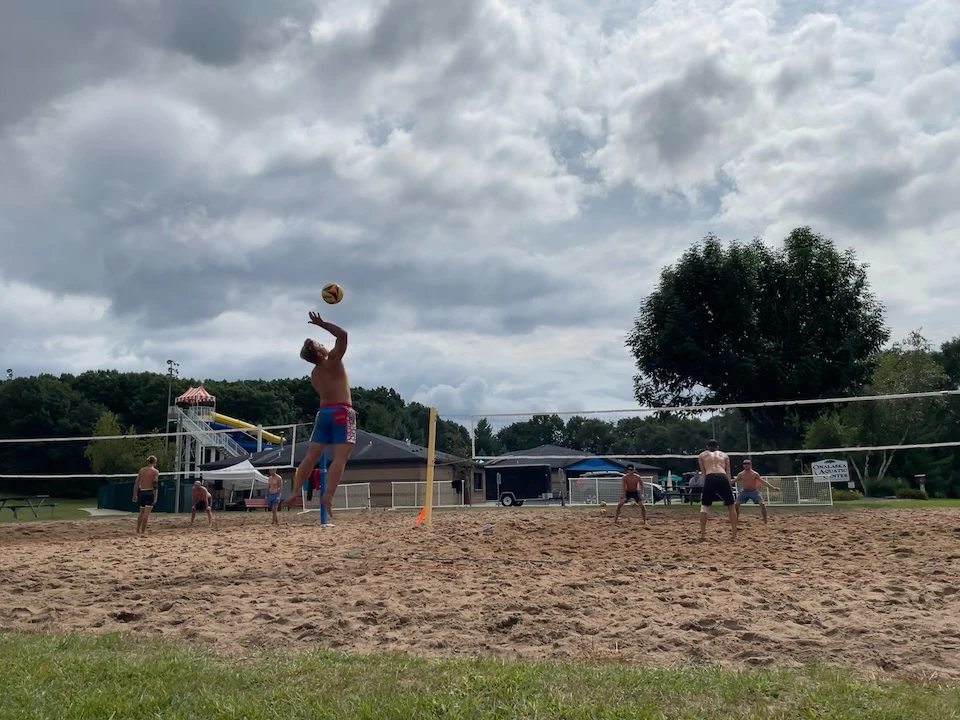
My name is Kyle and I run volleyball leagues! I run a few every year, and have for the last 6 years now in the La Crosse, Wisconsin area. I've also been playing in adult volleyball leagues since my high school years of all formats (competitive, bar leagues, etc). The leagues I run vary in formats (doubles, KOB/QOB ladder leagues, quads leagues, etc) and in court type (indoor, grass, and beach). My leagues were the inspiration behind building volley.love, a sports league management platform designed for volleyball. I'll mention it throughout the guide and talk more about where it could save you time at the end, however this guide is intended to be useful regardless of whether or not you choose to use any league management software.
Before the Season
There are some things you have to figure out before you do anything else. Around 3 months before the ideal start of your league, you should pick a format, gauge interest, find courts, get team registration figured out, and start recruiting teams. Then a few weeks before the start of the league (or when it fills) you will create the schedule and send it out. I'll talk a little more about each step in this process.
Pick a Format
What kind of league do you want to run? Grass coed quads? Indoor men's sixes? Beach women's doubles? Most likely you already have something in mind by the time you are reading this guide. If you don't, ask around with those you wish to play with.
Gauge Interest and Get Input
To run a league, you have to have enough teams. While a 3-team league is possible, it wouldn't be very much fun. You need to ask around in your volleyball community to see if there are enough people at the level you are aiming for that would be willing to play in your league. Most likely many of these people will already be committed to playing in other leagues, so trying to figure out which night of the week is going to work for the most people is very important. If you don't yet have a venue in mind, it's also a good idea to ask about location ideas. Your volleyball community is a great source of knowledge and connections.
If you're having trouble finding enough players, you may have to loosen up what level you are aiming for. If you are hoping to run an A level league but can't find enough interested teams, lowering the level to BB+ can increase the possibilities. Lower the level too far and you will lose more of the competitive players, however you will also greatly increase the number of players you are drawing from. The mathematical power law implies that if you've got 50 A level players in your area, you likely have 250-500 B level players in the same area. So use skill level as a tool to expand your search.
You should try to get more interested teams than you actually need to run your league. Inevitably, some will end up not committing when the time comes to actually sign up, or they will merge with other teams.
Find Courts
Ok, great. You've got a format, a skill level, a night of the week, and interested teams. Now you have to find court space. Maybe you already had a place in mind before you started, but now is the time to actually make sure you can get that space.
This can be tricky. At least in my area, it's far easiest to find grass space and run a grass league (caveat: you need to bring your own nets). This is most likely to be free, or very cheap. A park with a large green space can be good enough. You may still want to double check with your local park and rec before you start consistently showing up each week since they may also have conflicting plans for that space.
If running a sand league, public sand courts are your best bet. Most likely you will still have to reserve (and pay for) these courts with your local park and rec department. Maybe your area has bars and bowling alleys that have sand volleyball courts and host leagues. Most likely they will be booked with their own leagues, but if you have a connection it may be possible to rent courts with them. However, these private venues are primarily incentivized to sell food and drinks, so if you're running a doubles league and bringing less people on a Wednesday night than they would have with their own league, it might be a hard sell to convince them. There may also be other larger volleyball facilities around you that happen to have some free space. It never hurts to ask.
Indoor court space can also be somewhat difficult to find. Private indoor facilities likely exist around you, however, like the bar courts, they will likely be using it to run their own leagues, club sports, etc. You can also try with local park and rec again to see if you can find some gym space at local schools.
For my leagues, I have used both public courts that I rent through my local park and rec, and there is one arrangement I have with a local bar for renting us some court space on Wednesdays during the summer. Then for my indoor leagues I rent space from a local facility.
If you can avoid it, don't pay for courts until you've recruited enough teams. That will partially depend on making sure you charge enough for registration fees, which we'll talk about next.
Do the Math
Next up you have to make sure you don't lose money in paying for that space. How much should each team pay to ensure your costs are covered and there is prize money leftover? This is going to require a little bit of math, but thankfully it's pretty easy to do.
Let's say you have 2 courts and 2 hours of play on Tuesday nights that you can rent for 15 weeks. Suppose that particular place wants to charge $30/hr/court. You are looking at paying $1,800 for total court rental cost (2 courts * 2 hours * 15 weeks * $30).
2 courts and 2 hours can support a maximum of 8 teams on a given night. Each team will have to pay an equal share of that $1,800 as part of their registration fee.
You may also have equipment costs to cover, and potentially some software to help run your league that also has a cost. You need to include all of these things in your math.
You also want to be careful, because you may not actually get all 8 teams that you're hoping for. It might be that you end up with 6 instead, and you'll still want to make sure you aren't underwater in running your league.
So let's add it together.
$1,800 for courts + $59 for volley.love + $500 for prize money = $2,359.
Playing it safe and assuming we'll only get 6 teams, we get $2,359/6 teams = $393.17 per team. Rounding that up you end up with $400/team for registration fee. If you end up actually getting 8 teams, you'll then have $3,200 total to work with, which would leave a full $1,341 leftover for prize money.
Find a Sponsor (optional)
Maybe $400 is too steep for your league and you can't field teams at that pricepoint. Your options are ultimately to reduce expenses (find a cheaper venue), or to gather more income (find a sponsor).
Finding a local sponsor can be an easy way to ultimately save all teams some money, or to add to the prize pool.
For my leagues, there have been a number of local businesses that have sponsored over the years. We advertise them within volley.love so it's essentially like they are paying for advertisements. It's a win-win-win, and in my experience it's not too hard to find a sponsor willing to pay $500 for a 15 week league. Just start asking around.
Recruit Teams (and make them pay immediately)
Contact all those teams that said they were interested and get them to commit and sign up. If you're managing your league without software, consider using a Facebook event or group to keep track.
Be deliberate about payment being required to actually hold their spot, or you will have some individuals you'll be hassling all season to pay you. It's inevitable, and it will save you a ton of headaches and confrontation if you just require payment up front.
Pay for the Courts
Once you have enough money in the form of registration fees and sponsorships (if any), go ahead and pay for the courts. Don't delay on this too long or you may lose the venue.
Make a Schedule
There's way too much to say about making a schedule. The easiest way to handle this is to use sports scheduling software like volley.love. However if you want to do this by hand, you can. Just know that it's a deceptively difficult thing to do. A simple round-robin might work for your league if all the math works out perfectly. But most likely you'll have some other things to keep track of.
- Team accommodations
- Double-headers if odd number of teams
- Equal matchups throughout the season
- Avoiding empty courts (you paid for the space and people want to play - use it all)
- Distributing time slot assignments evenly
- Avoiding scheduling on holidays
- Saving enough weeks at the end of a playoff bracket (if you want one)
- Preserving a makeup week before playoffs?
- Etc
If you start down this path of doing this manually, you are in for many hours of staring at a spreadsheet trying to keep everything fair and balanced. This topic has already inspired me to write a whole separate blog post about it: Why ChatGPT can't create league schedules.
The "make a schedule" problem is really the whole reason I created volley.love in the first place. I would highly recommend saving yourself the time and using some league scheduling software to solve this problem.
Regardless of how you make the schedule, send it out to teams as early as possible once you have it figured out.
Most likely a team or two will respond and point out a problem. You can choose to try to accommodate and fix it, or just keep the schedule you have. It's common to have to go through at least 2 or 3 revisions when making a schedule.
Remind Teams
About a week before the season, it's probably wise to remind all the captains about the start of the league. Simply message each captain and remind them so that hopefully that first week everyone shows up.
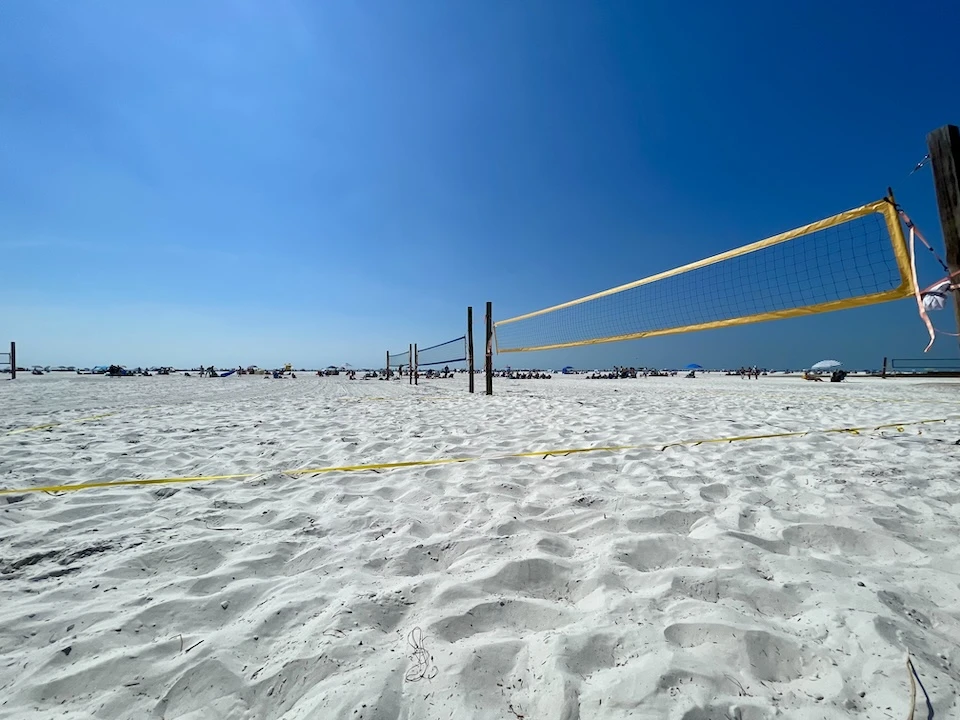
That's it for setting up the league! And best of all, that's 90% of the work in running a league. There is some more to do during the season, but it doesn't have to take up much of your time if you remain organized and on top of things.
During the Season
Get scores
As matches complete, collect scores from teams and track them somewhere. A spreadsheet is a good idea, but that may not be the most convenient tool to be working with while on your phone at a sand court. You can also just jot scores down in a simple notes app while you're there, and then record it into your spreadsheet later.
If teams leave without giving you scores, message them to get their scores as soon as possible or they will forget what their scores were and will just be guessing.
If you are using volleyball league management software, like volley.love, captains can enter their own scores as matches complete and save you the time.
Update standings
As you get scores, update the overall standings for the league. If you're managing things in spreadsheets, this should be just another tab in your spreadsheet where you update the tally of wins, losses and point differential (or however you wish to rank teams for your standings).
Once updated, post those standings where captains can see them. Again, if you're using a volleyball league management platform such as volley.love, this is taken care of for you. Otherwise you can just update your pinned post on Facebook, or a shared Google Sheet, etc.
Handling cancellations and communication
Unfortunately, weather happens and if your league is outdoors you are likely to experience at least one cancellation due to storms.
Make a cancellation decision early enough in the day and stick to it. It's not worth the risk of playing in the lightning, especially in a field or on a beach where the metal uprights for the net are the tallest thing around. It's better to be safe and just reschedule those matches.
Often if it's just rainy, you can play through. I tend to take a more democratic approach here and will message captains early in the day to take a vote. If enough want to play, we'll play in the rain.
If you have to cancel and have room to reschedule, then update the schedule and get it sent out to teams again.
League management software should be able to help you out again here, if you choose to use any.
Build the playoff bracket
As the season gets further along you'll want to start thinking about your playoff bracket, if you decided to have playoffs.
Thankfully, this is a much easier thing to handle. There are tons of resources online for getting a bracket of a given type (single-elim or double-elim) for a given number of teams. You can easily use one of these brackets and fill them in based on the standings from the league at the end of the season. printyourbrackets.com is a great resource for finding these.
Scheduling the matches in the bracket is still required. It's typically easiest to just go round by round, top to bottom so that you can easily avoid scheduling two matches to play at the same time where one depends on the outcome of the other. It's harder here to avoid having teams sit between matches during playoffs, though you might be able to arrange things in a way to fully avoid it.
Don't forget to think about the third place match. Are you planning on paying out prize money to third place? If so that's another match to schedule that probably isn't on the playoff bracket you found.
Once you have this filled out, send it out to the teams. Everyone needs to know when to show up and you will very likely have to remind them of things like "if you win the first match, you'll sit out one round and then play again" so that everyone sticks around when they need to stick around.
Pay out prize money
Once the season is complete it's important to promptly pay out prize money. Players will likely not want to come back if they feel they weren't awarded the prize they expected. You don't necessarily have to communicate the prize amounts up front, but it can help set expectations if you paid a high court fee and didn't get a sponsor.
Wrapping up
Congratulations! You ran your league. I hope it was a huge success and everyone had a lot of fun. And ideally, you didn't lose any money in the process.
Now, obviously I'm biased since I built it, but volley.love can save you a lot of time compared to managing everything manually on paper or in spreadsheets. You'll still need to do the upfront work - gauging interest, finding courts, doing the math on pricing. But once you get to team registration, volley.love handles most of the rest.
You create your league in the app, enter all the details you've already figured out (format, location, night of the week, registration fee, etc), and send out the registration link. The system can enforce payment at signup if you want, and it automatically collects captain emails for sending reminders throughout the season.
Once enough teams register, we'll build your schedule for you. You review it, request changes if needed, and approve it. No spreadsheet headaches. The system emails it to teams and sends automated reminders before the season starts.
During the season, captains enter scores directly in the app. We remind them if they forget. Standings update automatically. If you need to cancel due to weather, you can reschedule matches with a few clicks and it emails the affected teams right away.
When playoffs come around, volley.love fills out the bracket and updates the schedule automatically.
You still have to do some work upfront, but once the season starts, volley.love removes most of the administrative work. I hope you consider using it for your next league.